Community power – affordable energy for all?
The government recently released its ambitious Local Power Plan, backed by up to £1 billion new funding, to help support locally-owned clean energy generation projects on community buildings. Tom Taylor of the Kirklees Climate Commission explains how community energy projects can help people and businesses to reduce costs and build resilience.
The energy business is a complex one. Electric power is generated, distributed, bought and sold by different big businesses, all regulated by national and international rules.
At a simple level, households pay for a connection to the energy system (a daily standing charge) and for the energy they use, whether supplied as gas or electricity. An average Kirklees household has a monthly energy bill of £167 a month, or about £2000 a year.
Over half of the UK’s electricity is now generated by wind and solar. These are now the cheapest ways to generate electricity, and the best for the environment too as they produce minimal greenhouse gases.
So, if generating energy is getting cheaper, why are our electric bills not lower?
It is because the price of gas currently sets the price of electricity, internationally. Historically, this made sense as the cheapest electricity was produced by gas power stations. Now that wind and solar is cheaper, and gas costs are high, this means big profits for energy companies.
In recognition of this, the UK government is taxing these profits at 75%. To avoid paying all of this tax, energy companies reduce their profits by investing more in their businesses. Shockingly, they are not investing in renewables, but in new oil and gas projects. The government also adds some taxes and levies to energy bills (16% on electricity and 5.5% on gas). These funds are used to address social and environmental problems related to our energy market and systems.
If only we could each generate our own electricity from wind and solar, and use it immediately, then we would have the lowest bills. In reality, most of us do not have the land or roof space and the capital funds to make our own individual wind and solar systems. Also, we might need lots of energy when our system is not generating much, and small-scale systems may not work out any cheaper than buying energy as we do now.
Community energy projects aim to get the benefit of larger scale solar and wind, but with the profits and benefits going to the community instead of international shareholders. Local households and organisations form an ‘energy club’ and aim to match their use of electricity to generation as much as they can. This saves the costs involved in moving electricity around the country. Battery systems in homes and organisations can be topped up when it is cheap and plentiful, and used when needed.
This is how community energy projects can put the power back in the community. If we own the wind and solar systems that generate our electricity, we can decide how to use the energy and how to use any profit. The organisation is set up to be democratically controlled for collective and community benefit, not just for private profit.
Kirklees only has one Community Energy project – the HoTTWind community wind turbine near Holmfirth. It generates electricity which is used by Longley Farm, and donates a share of profits to community organisations each year. We could have so many more, like Leeds or Manchester.
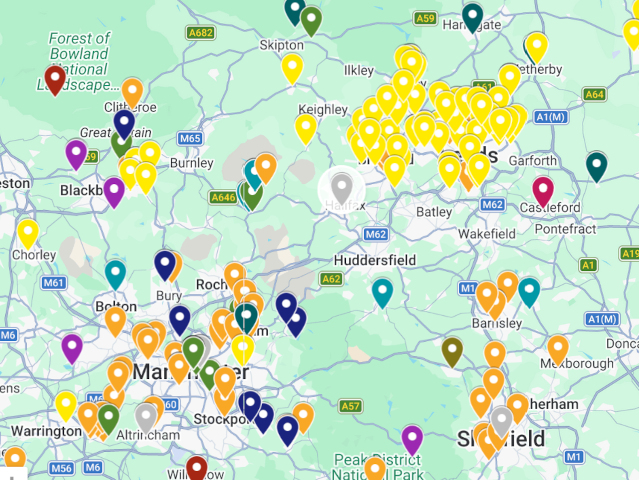
Community Energy England supports communities to help set up energy projects. You can use their project map to explore what’s already happening around the country.
In Kirklees, support for community-led energy projects is also available through the Energy Neighbours project.
Energy Neighbours works with residents and community groups to empower local people to take climate action and reduce fuel poverty in their community. Led by Third Sector Leaders Kirklees, it is funded through the National Lottery, with the Kirklees Climate Commission as a project partner.
Cleaner energy, community power, lower bills and resilience to future energy crises. What is not to like? Let’s get started.
Tom Taylor is a Kirklees Climate Commissioner and works freelance supporting community organisations and cooperative businesses.